
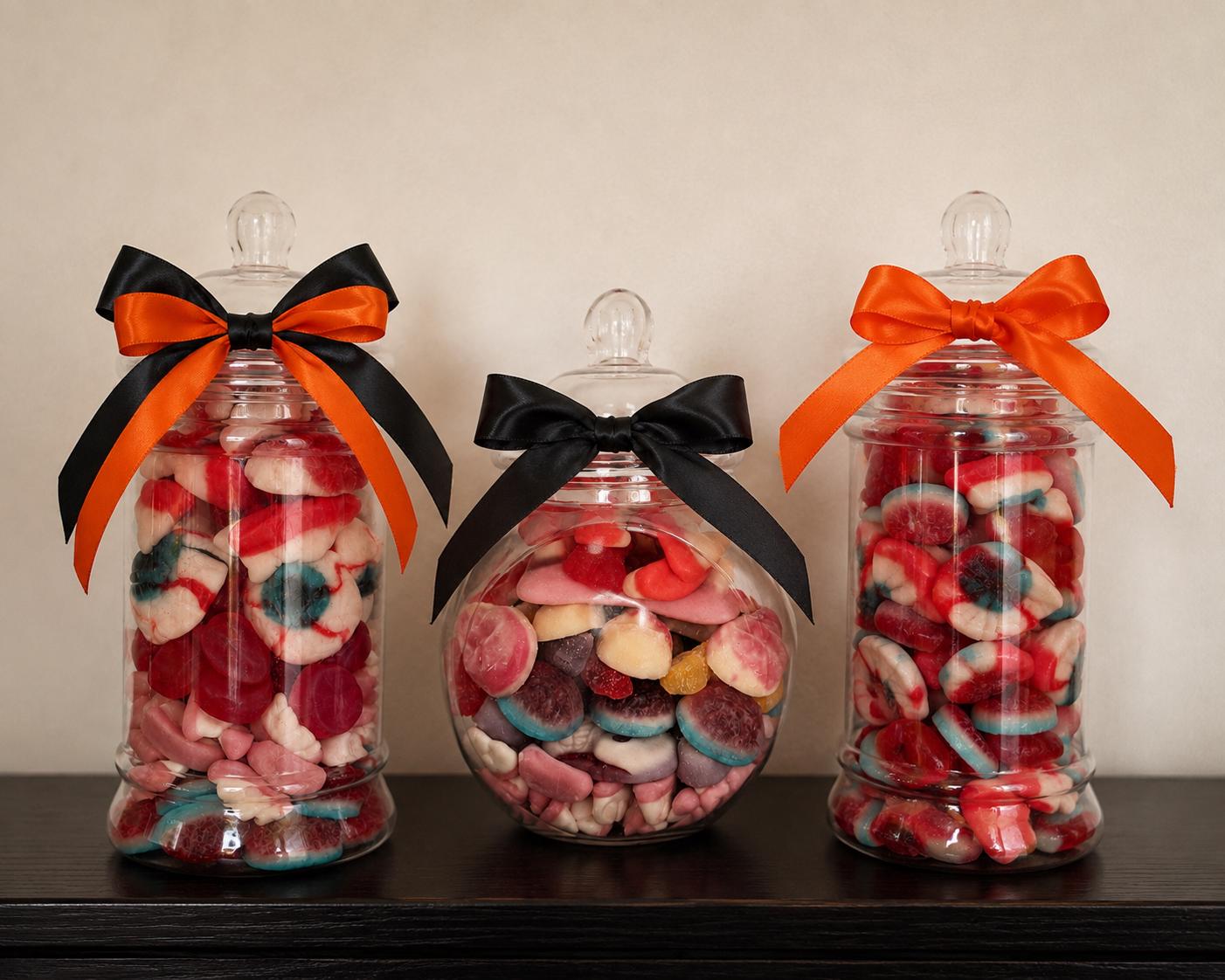
A sweet table is the easiest way to make a party look like you tried very hard when you really didn’t. Fill some jars, line them up, add a bit of colour and people drift over, chat, graze and take photos. Here’s how to put one together for a hen do, a baby shower or a milestone birthday, with real numbers and a few tricks that save money and stress.
Start with a simple timeline
Don’t leave this to the night before. A relaxed plan looks like this:
- Four weeks out: pick the theme and colours, set a budget, count your guests.
- Three weeks out: sort jars, bags, scoops and signs. Check what you already own before buying anything.
- Two weeks out: order the sweets. Leave room for delivery delays and the odd missing flavour.
- One week out: label everything, write allergen cards, buy ribbon or tissue paper.
- The day before: fill the jars, set the table, cover it loosely and keep it out of the sun.
- On the day: uncover, put out the scoops, take a photo before anyone touches it.
That’s it. Nothing here needs more than an hour at a time, and doing it in small chunks means you actually enjoy the party.
Pick a theme and colour scheme
Colour does most of the heavy lifting. If you choose three shades and stick to them, the whole table looks planned, even if the sweets themselves are completely ordinary.
Hen dos suit blush pink, white and gold, or bright neon for a night-out feel. Think strawberry laces, marshmallows, pink fizzy bottles and gold-wrapped chocolate coins. A few cheeky shapes never hurt either.
Baby showers are traditionally pink, blue or a soft mix of the two. If the sex is a surprise, go for lemon, mint and white instead. Pastel marshmallows, milk bottle sweets and foam shapes in soft colours look lovely together.
Milestone birthdays can be themed by decade, which is where the fun is:
- Sweet 16: bright pinks, glitter and fizzy sweets, plus the odd trendy sour.
- 30th: the sweets they grew up on in the 1990s. Think chewy bars, fizzy cola bottles and sherbet.
- 40th: a 1980s mix of retro favourites, from Drumsticks to Parma Violets.
- 50th: 1970s classics, such as sherbet pips, rhubarb and custards, and aniseed balls.
For a retro table, mix colours instead and go for a bold, jumbled look. It works because that’s how the sweet shop on the corner looked anyway.
How many sweets per guest?
This is where most people go wrong, usually by buying far too much. As a rough guide:
- Sweet table as the main treat: around 80 to 100g per adult.
- Sweet table alongside cake and food: 40 to 60g per adult.
- Children: 30 to 50g each, depending on how much other food is about.
- Favour bags to take home: an extra 30 to 40g per guest.
So for 20 adults with cake and nibbles, you’re looking at roughly a kilo for the table and maybe 700g for favours. Round up slightly, because some sweets always go faster than others (marshmallows and fizzy things vanish first). Buy more of those, not more of everything.
Jars, bags, scoops and tongs
Presentation is half the appeal, so it’s worth thinking about the setup.
Use a mix of glass jars in different heights. Apothecary jars with lids, cake stands and small bowls all help, and raising some items on boxes covered with a tablecloth gives the table shape. A flat row looks dull. A bit of height looks expensive.
Give every jar its own scoop or tongs. Sharing means mixing flavours and spreading germs, which nobody wants. Offer paper bags or cones for guests to fill, with a small stack of stickers or ribbon nearby so they can finish them off.
If you’d rather not hunt for containers, a few pick n mix jars already filled with sweets save you the faff of decanting, and they double up as a gift for the guest of honour afterwards. Fill the rest from bags, keep spare stock hidden under the table, and top up as the evening goes on so nothing ever looks raided.
Where to put the table
Location matters more than people think. Choose a spot away from radiators, direct sun and the doorway, because chocolate softens, fizzy sweets go sticky and a bottleneck by the entrance is miserable. A wall behind the table gives you a backdrop, so hang bunting, a paper garland or a few balloons there.
Make sure there’s space on both sides so people can queue without blocking the food table. Put the table at about waist height, so smaller guests can reach, and keep anything fragile at the back. A wipe-clean cloth underneath is a good shout, because sherbet and sticky fingers will find every surface.
Signage and labels
Signs make the table look finished. A big title sign (something like “Sweet Shop” or “Mary’s 50th Pick & Mix”) sets the tone. Then add small tags on each jar with the name of the sweet.
Handwritten labels look charming if your writing is decent. If it isn’t, print them and cut them out, or use chalkboard tags. Keep fonts large and plain so people can read them in dim light.
A little rule card is useful too: “Take a bag, fill it up, tongs only please.” Simple, friendly, hard to ignore.
Allergen cards
This is the part people skip and then regret. Always write a small allergen card for the table, or for each jar if you can.
Most places that sell sweets online UK put ingredients and allergen details on each product page, which makes the research a lot easier than squinting at a tiny wrapper. Check every packet and list the major allergens, including milk, nuts, soya, gluten and gelatine. Many sweets are made in factories that handle nuts, so say so where it applies. Keep the original packets or ingredients lists handy in a box behind the table in case someone asks.
It’s also good manners to offer a few options that suit different diets. Many fruit gums, fizzy sweets and jellies are vegetarian or vegan, and some chocolate is dairy-free. If you have a guest with a serious allergy, ask them directly before the day and let them know what you’ve bought.
Easy games for the table
A sweet table doubles up as the entertainment if you let it.
Guess the sweets in the jar. Fill a clear jar, count the contents before you seal it, and ask guests to write a guess on a slip of paper. Closest wins the jar. It’s cheap, it’s quick, and everyone has an opinion about volume.
Sweet bingo. Make cards with sweet names on a grid (jelly beans, sherbet, fudge, cola bottles) and call them out, or have guests tick off the ones they spot in their own bag. At a baby shower, add a prediction round, such as guessing the due date or the weight.
Blind taste test. Blindfold a few brave guests and give them a sweet to name. Hen dos tend to take this one in an unhinged direction.
Keeping it classy for adults
A table doesn’t have to look childish. For grown-ups, try:
- Dark chocolate-covered ginger, nuts or fruit, in tidy bowls
- Gin and tonic, cola, or fizzy cocktail-style gummies
- Salted caramels and fudge in kraft paper bags
- Champagne-coloured or gold sweets for a toast
- Fewer flavours, in better jars, with neat labels
A monochrome table in black, white and gold feels instantly more grown-up than a rainbow. Add fresh flowers or a few candles and you’ve got a centrepiece.
Dress the table up
A few finishing touches lift everything. Scatter some confetti or a few loose sweets around the base of the jars, add a small vase of flowers or greenery, and use a runner in your theme colour. Fairy lights behind the table look lovely in the evening, and a cake stand piled with marshmallows is a classic centrepiece. Keep the extras low so guests can see over them.
Take-home favours
Favour bags are the sweetest goodbye. Small cellophane bags tied with ribbon and a tag with the guest’s name work perfectly, as do mini jars or little boxes.
Buying in bulk and splitting it yourself usually works out cheaper than buying pre-made favours. Set aside ten minutes with a friend, a good playlist and a scoop, and you can fill twenty bags in no time.
Aim for about 40g in each bag and mix a couple of textures: something chewy, something fizzy and something soft. A small thank-you note inside makes them feel personal.
A realistic budget
Costs depend on your guest list, but a typical breakdown for around 20 guests might be:
- Sweets: the biggest chunk, perhaps 60 per cent of your spend.
- Jars, scoops and bags: around 20 per cent, much less if you borrow or reuse.
- Signs, labels and decoration: about 10 per cent.
- Favours and extras: the last 10 per cent.
Cut costs by borrowing jars from friends, using one or two big statement containers instead of many small ones, and making your own signs. Spend the money on the sweets, because that’s what people remember.
Last bites
A good sweet table is mostly about planning, colour and a bit of care. Keep the theme simple, buy sensibly, label everything, and leave a gap on the table for people to stand and chat. Then step back and enjoy the moment when someone says, “Oh, how lovely,” and reaches for the scoop.
