
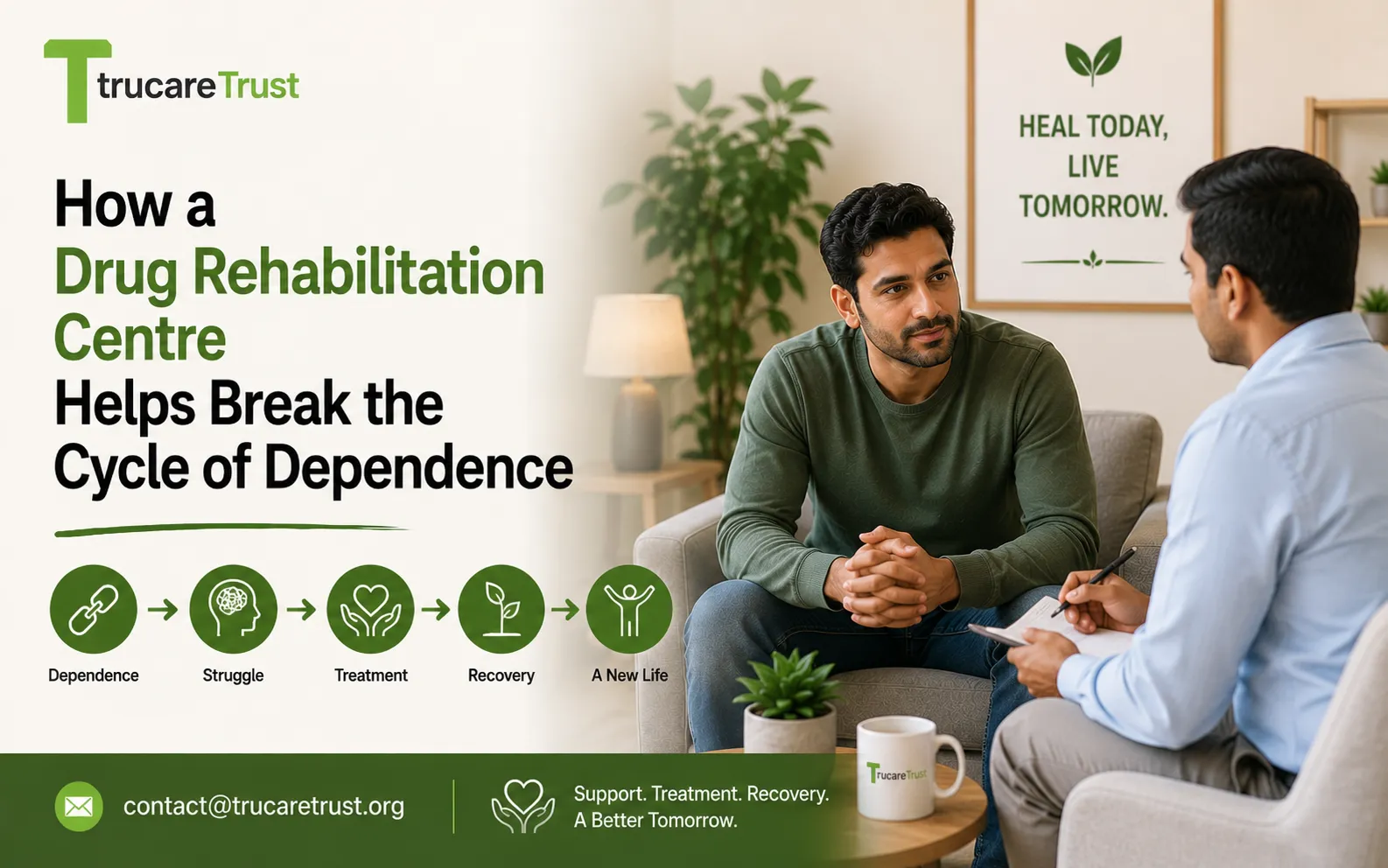
Drug dependence often develops as a repeating cycle of craving, substance use, short-term relief and harmful consequences. When evaluating a drug rehabilitation centre India, families should look for structured treatment that addresses every part of this cycle rather than simply separating the person from drugs for several weeks.
Understanding What Maintains Dependence
Continued drug use is not explained by weak character alone. Repeated exposure can affect reward, stress, judgement and impulse control. People may use drugs to avoid withdrawal, manage emotional pain, cope with pressure or feel temporarily normal. Easy availability, unstable relationships and contact with substance-using peers can reinforce the pattern.
Treatment begins by assessing the substance used, frequency, route of use, withdrawal history, physical health, mental state, family situation and previous attempts to stop. This information allows the clinical team to identify immediate risks and build an individual plan.
Regular review is equally important. Sleep, cravings, mood, participation and physical symptoms can change during admission. The plan should respond to new information rather than continuing unchanged merely because it appeared on the original schedule. Residents should understand these changes and have opportunities to ask questions.
Managing Withdrawal Safely
Withdrawal symptoms depend on the drug involved. Opioid withdrawal may cause body aches, vomiting, diarrhoea, anxiety and intense cravings. Sedative withdrawal can cause seizures and may be medically dangerous. Stimulant withdrawal may involve exhaustion, depression or suicidal thoughts.
A clinician should decide whether detoxification is required and where it can be managed safely. Medication may be used to reduce symptoms or treat specific substance-use disorders. Detox addresses physical stabilisation, but it does not remove triggers or teach new coping responses.
Interrupting Automatic Behaviour
Residential care creates temporary distance from dealers, using companions and familiar environments. A predictable routine of sleep, meals, counselling, exercise and responsibilities helps restore stability. Structure is useful when it supports treatment; rules should not become punishment or unnecessary control.
Individual counselling helps residents identify the thoughts, emotions and situations that usually come before drug use. Cognitive and behavioural approaches can strengthen problem-solving, craving management and refusal skills. Motivational methods help the person examine uncertainty without humiliation or confrontation.
Treating Mental and Social Factors
Depression, anxiety, trauma, psychosis and attention difficulties may contribute to repeated use or appear alongside it. These conditions require assessment by qualified professionals. Treating addiction while ignoring serious mental-health symptoms can weaken recovery and increase risk.
Family sessions may address broken trust, financial enabling, conflict and communication. Relatives learn to provide support without giving unmonitored money, hiding consequences or constantly policing the person.
India’s Ministry of Social Justice and Empowerment reported in 2019 that approximately 77 lakh people required help for opioid-use problems. This scale underlines the need for accessible, evidence-based treatment rather than shame.
Preparing for High-Risk Situations
Before discharge, the resident should identify warning signs, triggers and practical responses. A relapse-prevention plan may include follow-up counselling, medication reviews, peer support, stable housing, work routines and emergency contacts. Reduced tolerance after abstinence can make a return to previous opioid doses particularly dangerous and increase overdose risk.
When considering a drug rehabilitation centre India, families should examine assessment quality, medical oversight, therapy, rights and aftercare. Dependence is broken through coordinated change across health, behaviour, relationships and environment—not through isolation alone.
